Mayo Hospice allowed Orla Freeman to be a wife, rather than a carer, and she will never forget the care and compassion she and her family received.
Shane Freeman was just 44 years old when he was diagnosed with cancer and for six years, he lived well. A young man, with an adoring wife and three sons, he managed his symptoms as best he could and never let his illness get in the way. Shane endured over 35 rounds of chemotherapy, four surgeries, and many bouts of radium treatment. He never saw cancer as a battle, it was like his travelling companion, and one that he wouldn’t allow slow him down. In his final 12 months, however, it became clear that his illness would not be cured. For the last 11 weeks of his life, Shane was under palliative care at the Mayo Hospice in Castlebar – something that proved a lifeline for Shane and his family.
“Those 11 weeks gave Shane quality time. He enjoyed day trips out, nights at home, and moments of normal life. He was living. The Hospice team managed his medication and symptoms in a way that made life possible, not just bearable. Palliative care isn’t about keeping you alive, it’s about keeping you living. It allowed me to be Shane’s wife, rather than his carer, and we will forever be grateful for the care and compassion that all of us received,” explained Shane’s wife, Orla.
Orla and Shane had been together since she was just 21 years old. He was the love of her life and although she had experienced grief previously, with the deaths of both of her mother and father, Shane’s diagnosis and eventual passing brought a whole new level of grief. “I thought I knew everything about grief, but losing a partner is different. What Hospice gave me, though, was the ability to have a ‘clean grief’,” she said.
By ‘clean grief’, Orla means she was able to be Shane’s wife, not his carer. Her grief, while still devastating, is uncomplicated because she got to both spend and enjoy that precious time with him. “You grieve from the moment you get the diagnosis, and you never go back to being the family you were. But the Hospice team helped me to survive – and continue to survive – to this day. Hospice care supports the family as much as the patient,” she added.
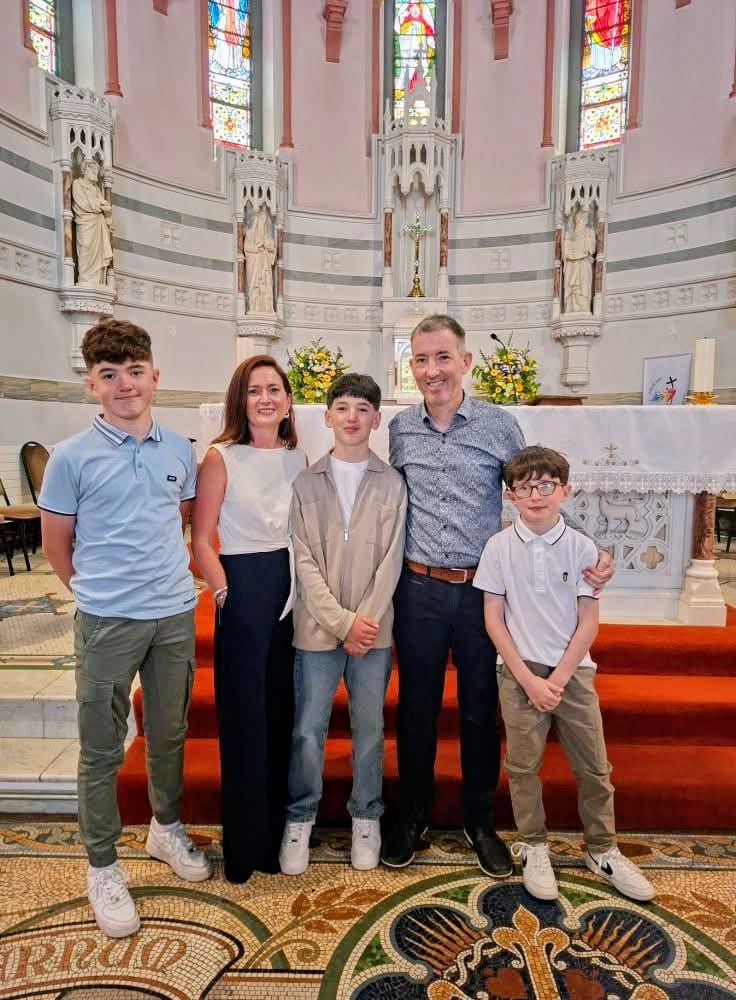
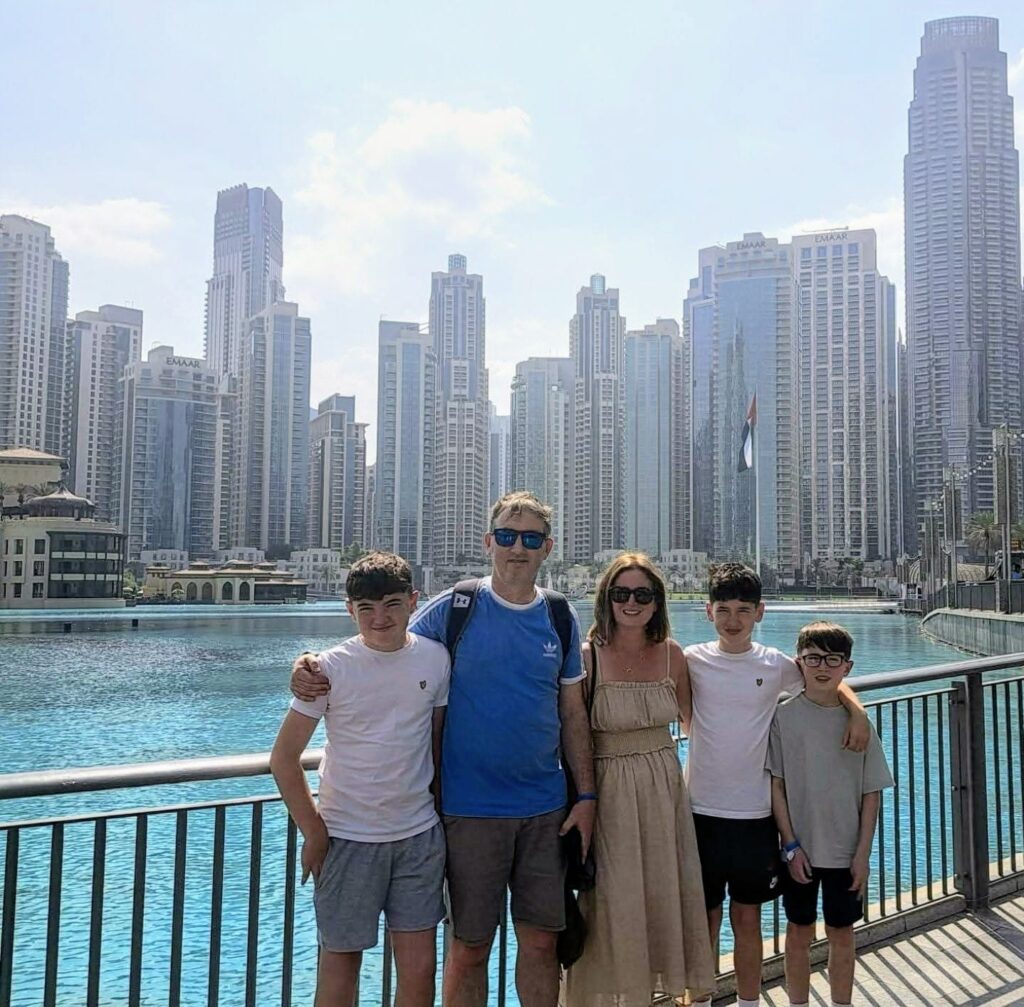
Throughout Shane’s 11 weeks in Mayo Hospice, Orla stayed with him every night. “He was very reluctant to go into hospice care at first, but he eventually did. Hospice wasn’t just about Shane, it was about all of us. It was a home away from home – a place that protected us, and it’s where I found strength,” she admitted. The Freemans chose to live in the present and during Shane’s final 11 weeks, they began having honest conversations about mortality.
Their three boys – now aged 15, 13 and 11 – had grown up with cancer as part of daily life, and their father going for chemotherapy was normal to them. Shane showed the boys how to survive. He was honest when he wasn’t well and left them a blueprint for coping with hard days and grief. He explained that he couldn’t have chemotherapy when he was in pain, and with guidance from the team at Mayo Hospice, Orla and Shane were supported in having honest conversations with their children.
They told them clearly that Shane was not getting better. Shane didn’t leave the hardest conversations to Orla alone – they did everything together. When one of the boys asked if their dad was going to die, Orla told them that every goodbye from then on could be the last. In September 2025, Shane passed away peacefully at Mayo Hospice, but before he died, he had planned every element of his funeral. He had told Orla exactly what he wanted. He asked her to deliver the eulogy, and to thank everyone for the previous six-and-a-half-years of love and support. He made sure she had passwords and practical details in place.
“Shane had given me very clear instructions for the eulogy. He wanted me to thank everyone for all their help and support. He wanted everyone to know that he had lived his life to the full, and had no regrets. We had planned it all together and in so doing, we had grieved together. When I stood up to deliver the eulogy, I wasn’t talking about Shane, I was speaking on his behalf,” Orla recalled.
During his final months, Orla’s sister had taken the couple’s three children for the summer, allowing Orla to stay with him in Castlebar. They celebrated their wedding anniversary there, as well as one of their son’s birthdays. The distinction of being able to be Shane’s wife during that time meant everything. Now, five months on, Orla still goes back to Mayo Hospice, because it’s where she feels closest to Shane. It’s also where Shane could see that his family would be supported, and that the community would be there after he was gone.
“It was in Mayo Hospice that we were able to have open conversations, able to talk about his death, and to say the things that we needed to say. I spent the time listening very carefully to everything he had to say, and it also allowed us to give our children every opportunity to grieve in a healthy way. I will be forever grateful to Hospice for the time they gave me with Shane,” she said.
Christmas was, understandably, difficult for the family, but on Christmas Day, Orla had a very special gift for each of their boys. The family visited Shane’s grave, and there, she presented each of them with a chain carrying their dad’s fingerprint. It had been something the Hospice team had organised before Shane’s death, and Shane had asked Orla to give the boys the gift on Christmas Day. Speaking on the Tommy Marren Show on Midwest Radio in January, during National Grief Awareness Week, Orla said the family cried together at the graveside.
“It was a relief for me to see them express themselves. The tears gave us all comfort. It was the most imperfect perfect time and the boys said it was the best gift they had ever received,” she explained. Coming into 2026 has been difficult for Orla and the family. 2025 was when Shane was last alive, and leaving that behind was a challenge. “Right now, everyone is numb. The anaesthetic is wearing off. The boys play sports and find their father in those moments, and I encourage them to express their emotions,” she said. The family continue to receive counselling and have attended bereavement workshops at Mayo Hospice.
“Grief is not black and white, and there’s no right or wrong way to do it. It’s not about good days or bad days, it’s about having good moments, good hours in our day-to-day lives. We have been experiencing grief for seven years, but there has also been love, support and hope,” she noted. Despite her huge loss, Orla wants to give strength to others by telling her story from the heart, as well as acknowledging the abundance of care and compassion she and her family received from Mayo Hospice.
“I think it’s important that people understand the story of hospice care and move past their fear of it. Shane’s pain was so well managed during his final few months, and it allowed us to make the most of every day. Palliative care isn’t about keeping you alive, it’s about keeping you living.”
We would like to sincerely thank Orla for sharing her story to help others, as part of Grief Awareness Week earlier this year.